

In the modern economic system, the true value of many businesses does not lie in physical assets, but rather in “reputation,” “trust,” and “commercial image,” which organizations have built over many years or even decades. Trademarks today therefore no longer function merely as symbols for distinguishing goods and services, but have become high-value business assets and the center of marketing strategies, investment, and international business expansion.
In many cases, the value of global brands may exceed all of the company’s tangible assets. The credibility of a brand therefore becomes a significant factor affecting consumer behavior, investors’ decisions, the ability to conduct licensing or franchising, as well as the organization’s capability to raise capital.
For this reason, modern trademark law has evolved from the traditional concept aimed at preventing “consumer confusion” toward the protection of the “commercial value of brands,” particularly well-known trademarks, which hold the status of highly sensitive intellectual property assets with substantial economic value.
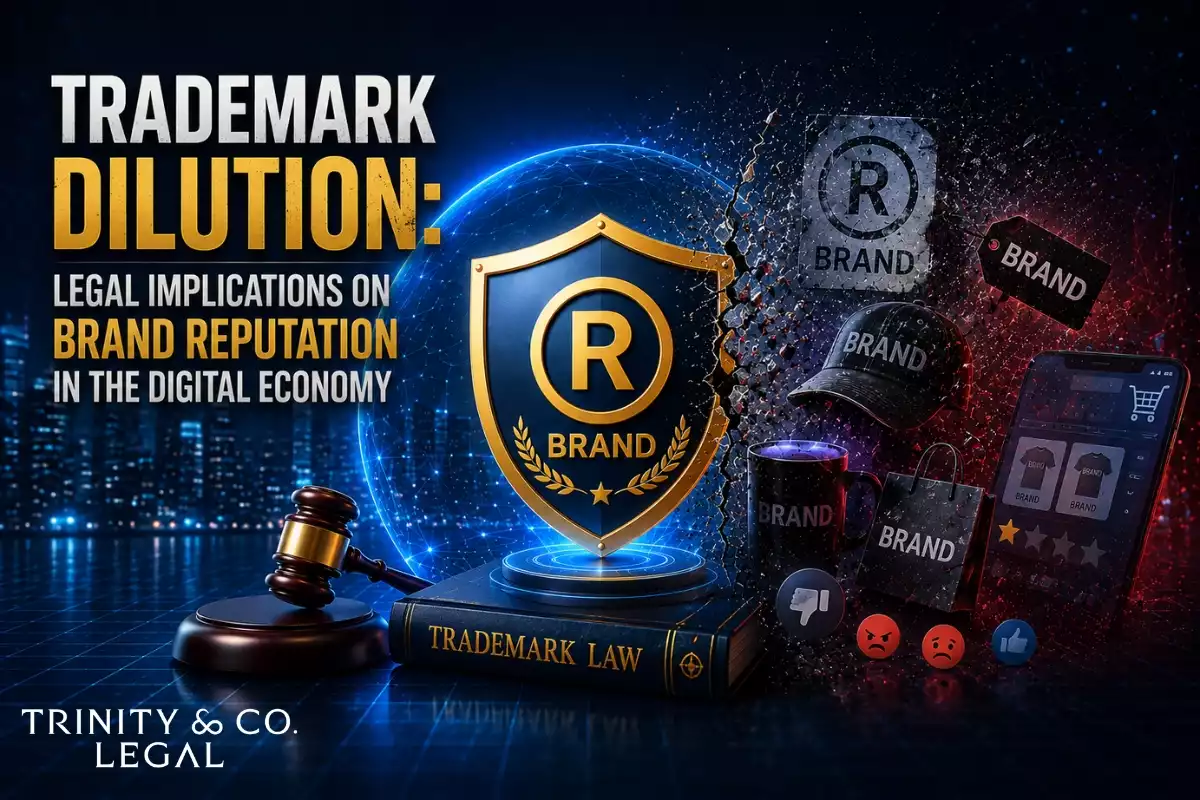
One of the legal concepts playing an important role in this context is “Trademark Dilution,” which refers to the use of a well-known trademark in a manner that diminishes the distinctiveness, uniqueness, or value of the brand, even where such use may not directly cause confusion regarding the origin of goods or services.
The concept of Trademark Dilution originated from United States law, which recognized that damage to a brand does not arise solely from cases where consumers are misled, but may also occur where a brand is repeatedly used, associated with inappropriate contexts, or utilized in a way that gradually weakens the distinctiveness of the trademark over time.
In theory, Trademark Dilution is generally divided into two principal categories, namely “Blurring” and “Tarnishment.”
Blurring refers to the use of a well-known trademark in connection with unrelated goods, services, or businesses in a manner that reduces the unique identity of the original brand. For example, using the name of a luxury global brand for ordinary retail shops, small businesses, or products unrelated to the original brand. Although consumers may understand that the businesses are not the same entity, such use may nevertheless cause the brand to lose its exclusivity, which constitutes the core of its commercial value.
In another form, Tarnishment refers to situations where a trademark is associated with negative contexts, unlawful acts, or content affecting morality and corporate image, such as the use of famous brand logos in pornographic media, illegal gambling, counterfeit products, or hateful content. Although consumers may not misunderstand the ownership of the brand, such conduct directly affects the credibility and commercial image of the business.
Under the Thai legal system, although the Trademark Act B.E. 2534 (1991), as amended, does not expressly codify the term “Trademark Dilution” in the same manner as foreign jurisdictions, the principles concerning the protection of well-known trademarks have increasingly gained significance, particularly under Section 8, which prohibits the registration of trademarks identical or similar to well-known marks in a manner likely to cause confusion or mislead the public regarding the owner or origin of goods.
Nevertheless, in practice, judicial trends and legal interpretation have expanded beyond the issue of “confusion” alone by increasingly emphasizing the protection of goodwill and brand reputation, particularly in cases where trademarks are used in bad faith to exploit the reputation of others or to associate brands with degrading matters.
The most significant legal consequence of Trademark Dilution is civil liability. Trademark owners may have the right to initiate legal proceedings to claim damages against infringers if it can be proven that such conduct adversely affects the reputation, image, or commercial value of the brand, even in the absence of direct competition or consumer confusion.
In many cases, such damages cannot be measured solely by immediate decreases in sales, but instead arise from reductions in brand equity, market confidence, or the ability to expand the business in the future, all of which may constitute enormous economic losses.
Moreover, courts may issue temporary injunctions or permanent injunctions ordering the infringing party to cease using the trademark immediately, particularly where the use causes damage to the brand’s reputation that cannot adequately be remedied by monetary damages alone.
In the digital era, such court orders may extend to the removal of content from social media, the shutdown of websites, the suspension of domain names, the removal of products from marketplaces, or even orders requiring platforms to suspend related user accounts, reflecting that trademark law today is no longer confined solely to the world of physical goods, but has fully expanded into the digital economy.
Furthermore, if the use of the trademark involves counterfeiting, imitation, or exploitation for improper commercial gain, the infringing party may face criminal liability under the Trademark Act as well as other related laws, including consumer protection law, competition law, and cybercrime law.
From a business perspective, the impact of Trademark Dilution is often more severe than direct legal damages because brand reputation requires substantial time to build but can be destroyed within a short period through the dissemination of online information, the association of the brand with negative issues, or the use of the brand in inappropriate contexts.
Today, many companies therefore implement serious brand protection and intellectual property enforcement systems, whether through monitoring trademark use on social media, tracking domain names, conducting takedown actions on online platforms, investigating counterfeit goods, or utilizing AI technologies to monitor brand infringements on a global scale.
Such risks have become even more complex in the era of Generative AI and the digital content economy, where ordinary individuals can rapidly create images, sounds, or content associated with brands and disseminate them worldwide within seconds. The use of trademarks in deepfakes, political contexts, or digital assets in the metaverse are all emerging legal issues that legal systems worldwide are attempting to address.
Ultimately, Trademark Dilution reflects the evolution of intellectual property law in an era where “reputation” has become one of the most valuable assets of organizations. In an economy driven by information and consumer perception, damage to a brand may affect not only short-term sales but also corporate valuation, investor confidence, and the long-term sustainability of organizations.
For this reason, trademark protection today is no longer merely a legal issue, but forms part of enterprise-level risk management strategies directly linked to economic value, competitiveness, and the long-term future of businesses.
Furthermore, in the context of international business transactions, damage arising from Trademark Dilution may directly affect corporate valuation in mergers and acquisitions (M&A), joint ventures, or fundraising from foreign investors, as modern business valuation increasingly places substantial importance on intangible assets, particularly intellectual property and brand reputation.
In many industries, such as technology, luxury goods, food and beverage, fashion, or digital platforms, brand value may become the primary factor determining the valuation of a business. Accordingly, disputes relating to trademarks or incidents damaging a brand may be viewed by investors as “material legal risks” capable of affecting revenue, competitiveness, and long-term business stability.
In practice, many investors therefore place considerable importance on Legal Due Diligence processes relating to intellectual property, particularly issues involving trademark protection, brand disputes, online infringement, and internal organizational measures to prevent reputational damage.
If an organization lacks adequate brand management systems or allows uses of its trademarks that dilute brand value without taking appropriate legal action, investors may perceive such organization as presenting corporate governance risks or deficiencies in intellectual property management, thereby directly affecting investment decisions.
In another dimension, damages arising from Trademark Dilution are also linked to issues of unfair competition and improper commercial exploitation because, in many cases, infringers do not merely imitate brands but intentionally exploit the reputation of well-known trademarks to create credibility for their own goods or services without investing in developing their own brands.
Such conduct may significantly distort market competition because it exploits the goodwill and trust built by original brand owners over long periods of time. From an economic perspective, this constitutes a distortion of competition and reduces incentives for innovation and quality improvement.
Accordingly, many countries have expanded trademark protection toward broader protection of “commercial reputation,” particularly in the context of e-commerce and cross-border digital platforms, where businesses may immediately access global consumers without maintaining a physical presence in those jurisdictions.
In the age of social media, brand damage has also become “multiplied” compared to the past because information, news, or content relating to brands can be shared, reproduced, and redistributed rapidly within minutes. In some cases, even before facts are verified, brand image may already have suffered substantial damage.
Clear examples include situations where brands become associated with social, environmental, or political issues, whether intentionally or otherwise, potentially leading to boycotts, attacks on social media, or widespread loss of confidence among consumers and investors.
In many jurisdictions, courts have increasingly recognized the significance of “reputational damage,” acknowledging that damage to corporate reputation may have genuine economic consequences even if such damages cannot be precisely quantified at the time the incident occurs.
In Thailand, although the concept of Trademark Dilution has not yet been expressly codified, legal interpretation and enforcement trends are increasingly moving toward international standards, particularly concerning well-known trademarks or brands possessing substantial economic value.
Additionally, Thailand is a party to several international agreements concerning intellectual property, including the TRIPS Agreement under the World Trade Organization (WTO) and the Paris Convention, both of which embrace principles granting enhanced protection to well-known trademarks.
In practice, large organizations no longer regard trademark protection merely as a matter of registration, but as part of enterprise risk management and corporate strategy. Many companies establish dedicated brand protection teams, utilize AI and digital monitoring tools to monitor online brand usage worldwide, and coordinate with government authorities, digital platforms, and international law firms to rapidly suppress infringements.
Ultimately, the phenomenon of Trademark Dilution demonstrates that, in today’s business world, “reputation” is no longer merely a matter of image or marketing, but rather a high-value economic asset and a critical element of long-term competitiveness.
As brands are capable of generating immense value, damage to brands inevitably produces immense consequences as well. In an era where information moves faster than the law, the management of reputational risks and trademark protection has become a Board-Level Issue that organizations can no longer afford to ignore, because ultimately what many businesses are selling may not merely be goods and services, but rather the “trust” consumers place in those brands.
Case Study: Crisis of Automotive Brand Reputation and Trademark Dilution Risks — Lessons from the “VOLVO Vehicle Fire Incident”
In the global automotive industry, a “brand” is not merely a trademark or marketing name, but represents safety, credibility, and engineering standards relied upon by consumers in making purchasing decisions. In particular, Volvo Cars has, over several decades, established its positioning as one of the world’s leading “Safety-Oriented Brands.”
Such image was not created accidentally, but resulted from long-term investments in research, technology, engineering standards, marketing communications, and corporate reputation management, to the extent that the term “Volvo” has become automatically associated with safety in the minds of many consumers.
Nevertheless, in the age of social media and digital news cycles, even a single incident may rapidly affect a brand’s global image, particularly incidents involving consumer safety, which lies at the core of the brand itself.
The Vehicle Fire Incident involving Volvo vehicles therefore serves as an important example illustrating the relationship between “brand reputation,” “market confidence,” and legal risks potentially leading to issues of Trademark Dilution and Reputational Harm.
Although in many cases vehicle fires may not yet have been conclusively determined to result from engineering defects, batteries, electrical systems, or external factors, once such incidents are disseminated online, the brand inevitably becomes associated with “unsafe conditions,” particularly where content is repeatedly shared together with negative commentary, speculation, or unverified information.
From a legal perspective, although cases of this nature may not constitute Trademark Dilution in the traditional sense involving direct third-party use of trademarks, they nevertheless reflect the same concept — namely, the diminution of brand value and credibility through association with negative contexts.
For brands positioned around “safety” such as Volvo, reputational damage may be more severe than the technical consequences of the incident itself because consumers purchasing such brands are not merely buying vehicles, but rather the “trust” accumulated by the brand over many years.
In the digital era, reputational harm may arise even before facts are fully investigated because social media algorithms tend to prioritize emotionally stimulating content involving fear or panic, thereby enabling incidents involving fires, explosions, or accidents to spread globally within hours.
Moreover, when brands are repeatedly discussed within negative contexts, even without court judgments or engineering findings confirming manufacturer liability, consumer perception may already have changed in practice, constituting a risk that traditional trademark law alone may not fully address.
From the perspective of corporate legal management, global automobile manufacturers therefore must manage risks across multiple dimensions simultaneously, including product liability risk, consumer protection risk, ESG risk, cybersecurity risk, and reputational risk, all of which in many instances may create economic consequences exceeding direct technical damages.
If such incidents lead to the dissemination of false information, manipulated images, misleading uses of logos or brand names, or the exploitation of incidents to unfairly attack brands beyond factual circumstances, organizations may consider additional legal measures, including trademark enforcement actions, tort claims, requests for platform takedowns, or crisis communication measures to control damage to corporate image.
Conversely, if incidents genuinely arise from defects, manufacturers naturally bear obligations to undertake transparent and rapid remedial measures, including product recalls, consumer notifications, coordination with regulators, and compensation for damages, because in today’s environment, markets evaluate organizations not only based on whether problems occur, but also on “how organizations respond to problems.”
The Volvo case therefore clearly reflects that, in the modern economy, trademarks are no longer merely legal assets, but rather the “center of trust” connected to the overall business value of organizations. Once brands become associated with negative incidents, whether through facts, media coverage, or social media trends, the consequences inevitably extend far beyond marketing or public relations concerns and become enterprise-level risks involving law, finance, investors, and long-term business sustainability. Ultimately, cases of this nature demonstrate that in an era where information moves faster than fact-finding processes, “brand reputation” may simultaneously constitute both the most valuable and the most fragile asset of organizations.
Disclaimer
This article has been prepared solely for the purpose of providing general legal information. It is not intended to constitute legal advice. The information appearing in this article may not be complete and may not reflect the latest laws. Readers should not rely on this article as a substitute for legal advice from legal professionals who must analyze the specific facts of each individual case. The publication or use of this article does not create a lawyer-client relationship, and all rights are reserved under the Copyright Act B.E. 2537 (1994).
Author: Pinprapus Chartikavanich
Date: 26 May 2026