

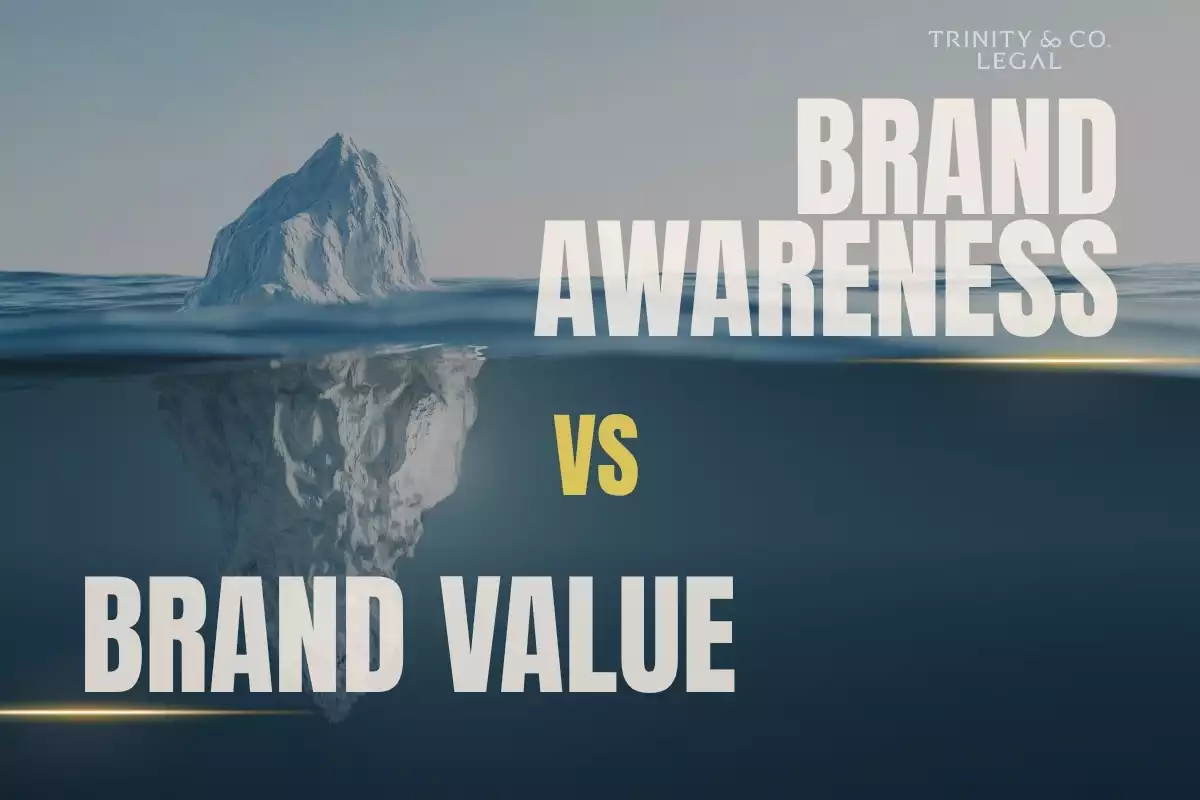
Building Recognition Is Only Half the Strategy
In an increasingly competitive marketplace, a brand is no longer merely a name, logo or marketing device. For many businesses, it represents a significant intangible asset—one capable of influencing consumer preference, pricing power, market positioning and, ultimately, enterprise value.
Businesses invest substantial resources in creating brand awareness. Advertising campaigns, digital platforms, sponsorships, influencers, packaging, customer experience and public relations are all designed, in one way or another, to ensure that consumers recognise and remember a brand.
Recognition, however, is only the beginning.
A business may succeed in making its brand widely known while simultaneously diminishing its commercial value.
The more important strategic question is therefore not simply:
“How well known is the brand?”
but rather:
“What does the market believe the brand is worth?”
That distinction lies at the heart of the relationship between Brand Awareness, Brand Equity and Brand Devaluation.
Brand Awareness Is Not the Same as Brand Value
Brand awareness generally refers to the ability of consumers to recognise or recall a particular brand.
At its most basic level, consumers may simply recognise a name or logo. At a more developed level, they may associate the brand with particular characteristics—quality, reliability, innovation, exclusivity, affordability or professional expertise.
This distinction is commercially significant.
A brand may have exceptionally high public recognition while possessing relatively weak brand equity.
Being known does not necessarily mean being trusted.
Being visible does not necessarily mean being valuable.
And being frequently purchased does not necessarily mean that the business retains meaningful pricing power.
The commercial objective should therefore extend beyond awareness.
The objective is to convert awareness into positive association, customer preference, trust and economic value.
From Brand Awareness to Brand Equity
Brand equity develops when consumers attach value to the brand itself, independently of the underlying functional characteristics of the product or service.
Consider two products with substantially similar specifications.
If consumers consistently prefer one over the other because of the name attached to it—and particularly if they are willing to pay a premium for that name—the brand has begun to generate economic value of its own.
Strong brand equity may contribute to a business’s ability to maintain premium pricing, encourage repeat purchases, introduce new products, enter new markets, negotiate with distributors and business partners, and withstand competitive pressure.
At that point, the brand is no longer merely supporting the business.
It has become part of the value of the business itself.
This becomes particularly important in investment transactions, joint ventures, licensing arrangements and mergers and acquisitions, where intellectual property, goodwill and other intangible assets may represent a material component of enterprise value.
Brand Devaluation: When Recognition Remains but Value Declines
One of the less discussed aspects of brand strategy is that brand awareness and brand value do not necessarily move in the same direction.
A brand can remain highly recognisable while losing value.
This is Brand Devaluation.
Brand devaluation occurs when the economic or perceived value associated with a brand deteriorates. Consumers may continue to recognise the name, but the associations attached to that name may change.
A brand once associated with exclusivity may become commonplace.
A brand associated with quality may begin to be perceived as inconsistent.
A brand capable of commanding premium pricing may gradually become dependent upon discounts.
The brand has not disappeared.
Its meaning has changed.
That distinction matters because the economic strength of a brand does not arise merely from recognition. It arises from what consumers believe that recognition represents.
Discounting and the Erosion of Pricing Power
Price promotion illustrates the issue particularly well.
Discounting can be an effective commercial strategy. It can accelerate sales, move inventory, acquire customers and respond to market conditions.
Persistent discounting, however, may produce a different result.
Assume that a product carries a stated retail price of THB 10,000 but is repeatedly sold at THB 6,000–7,000 through promotions.
Over time, consumers may cease to perceive THB 10,000 as the genuine economic value of the product.
The discounted price becomes the reference price.
When the business subsequently attempts to return to full pricing, the consumer’s reaction may no longer be:
“This product costs THB 10,000.”
It may instead be:
“Why should I pay THB 10,000 when it will probably be discounted again?”
The immediate commercial issue is lost margin.
The longer-term strategic issue is more significant:
the business may have weakened its own pricing power.
Once consumers are trained to purchase the brand primarily on promotion, restoring the original price perception can be considerably more difficult than reducing the price in the first place.
Overexposure and the Economics of Exclusivity
More exposure is not always more valuable.
For mass-market brands, broad distribution and maximum visibility may be entirely consistent with commercial strategy.
For premium and luxury brands, however, availability itself forms part of the value proposition.
Scarcity, controlled distribution, purchasing environment and customer experience can contribute directly to perceived value.
A premium brand that becomes available through every distribution channel, participates continuously in discount campaigns or permits uncontrolled third-party use of its identity may achieve greater short-term visibility while gradually weakening the characteristics that originally justified its premium positioning.
Accordingly:
Maximum Brand Awareness does not necessarily produce Maximum Brand Value.
The appropriate level of exposure depends upon the commercial position the brand intends to occupy.
Brand Dilution: When a Brand Loses Its Meaning
A strong brand generally communicates something specific.
The consumer sees the name and immediately associates it with particular qualities, experiences or expectations.
That clarity is valuable.
Problems may arise when the same brand is extended across too many unrelated products or services, licensed too broadly, used inconsistently across markets, or associated with third parties that do not maintain the standards expected of the brand.
The name may remain famous.
But its meaning becomes less precise.
This commercial phenomenon is often described as brand dilution.
For management, therefore, the question should not merely be whether a new product, partnership or licensing arrangement can generate additional revenue.
The more strategic question is:
“What will this transaction do to the meaning of our brand?”
Short-term revenue and long-term brand value are not always aligned.
Third-Party Use: Growth Without Control Creates Risk
Licensing, franchising, distribution and strategic partnerships can accelerate market expansion considerably.
They also create a fundamental brand-management issue:
the customer may not distinguish between the brand owner and the person authorised to use the brand.
If a franchisee delivers poor service, a distributor markets the product improperly, or a licensee produces goods below the expected standard, the customer may attribute that experience directly to the brand itself.
The legal agreement governing the relationship should therefore do more than establish royalty payments, sales targets or territorial rights.
Depending on the arrangement, businesses should consider provisions addressing matters such as brand guidelines, quality standards, approval rights, permitted channels, marketing materials, inspection and monitoring rights, intellectual property ownership, restrictions on sub-licensing and the cessation of brand use following termination.
From a brand-value perspective, control is not merely a contractual issue. It is an asset-preservation mechanism.
When Brand Strategy Becomes Legal Strategy
As brand value increases, legal protection becomes increasingly important.
Businesses often invest heavily in developing a name, visual identity, packaging and market presence before considering whether those assets have been adequately protected.
That sequence can create unnecessary risk.
Before substantial resources are committed to a new brand, businesses should consider whether relevant marks are available for use and registration, whether potentially conflicting rights already exist, whether registrations adequately cover the relevant goods and services, and whether protection is required in jurisdictions into which the business intends to expand.
Trademark protection should therefore not be treated merely as an administrative step following a successful marketing campaign.
For a strategically important brand, it should form part of the commercial planning process itself.
Brand Governance: Protecting Value from Within
Not all brand devaluation is caused by competitors or infringers.
Businesses can devalue their own brands.
Uncontrolled discounting, inconsistent customer experience, inappropriate licensing, excessive brand extensions, poorly selected collaborations and inconsistent communications can gradually undermine brand equity without any single event appearing particularly significant.
This makes Brand Governance increasingly important as businesses grow.
Management should consider who has authority to approve use of the brand, how intellectual property may be licensed, which distribution channels are acceptable, what quality standards apply, how promotional campaigns are approved, and how potential reputational issues are escalated.
Brand governance is therefore not solely a Marketing function.
Depending upon the size and structure of the business, it may require coordination between management, Marketing, Legal, Business Development, Finance and operational teams.
The objective is simple:
Growth should increase the value of the brand—not merely increase the number of places in which the brand appears.
Brand Value in M&A and Investment Transactions
The distinction between brand awareness and brand ownership becomes particularly important in corporate transactions.
A target company may operate a commercially successful brand, but legal due diligence may reveal that the underlying trademark is registered in the name of a founder, an affiliate or another entity.
A business may have substantial sales in several jurisdictions while trademark protection exists in only one.
Important logos, photographs, advertising materials, software, website content or product designs may have been created by third-party contractors without sufficiently clear intellectual property arrangements.
Licensing arrangements may also contain restrictions that affect a purchaser’s ability to continue using the brand following a change of control.
Accordingly, in an acquisition involving material brand value, the relevant inquiry is broader than:
“How famous is the brand?”
It should include:
Who owns it?
What exactly is protected?
Where is it protected?
Who else has the right to use it?
Can those rights be transferred or continue following the transaction?
and ultimately:
Can the value attributed to the brand actually be preserved after completion?
A business may possess substantial brand awareness without possessing equally strong legal control over the assets underlying that awareness.
For investors, that distinction can be material.
Reputation Risk Is Also Brand Value Risk
Modern businesses operate in an environment where reputational events can develop rapidly.
Social media has dramatically reduced the time between an operational problem and widespread public awareness of that problem.
A product issue, customer complaint, inappropriate communication, misconduct by a business partner or inconsistent response from management can move from an isolated incident to a significant reputational issue within hours.
This creates an important paradox.
The same Brand Awareness that allows positive information to travel quickly also allows negative information to travel quickly.
A highly recognisable brand therefore has more than an opportunity to protect.
It may also have more value exposed to reputational risk.
Businesses with significant brand equity should consequently treat reputation management, crisis response and brand protection as interconnected elements of risk management rather than entirely separate functions.
Protecting the Value Behind the Name
The development of a valuable brand can be viewed as a continuing process:
Brand Creation → Brand Awareness → Brand Equity → Brand Protection → Brand Governance → Brand Value Preservation
Each stage requires different commercial and legal considerations.
Marketing may create recognition.
Product and service quality may create trust.
Customer experience may create loyalty.
Intellectual property rights may protect identity.
Contracts may regulate third-party use.
Governance may protect consistency.
Management decisions determine whether the resulting value is preserved—or gradually eroded.
For this reason, businesses should not measure brand success solely by followers, impressions, market visibility or public recognition.
Those metrics may demonstrate awareness.
They do not, by themselves, demonstrate value.
The more important questions are whether the brand retains consumer trust, whether it maintains pricing power, whether its market positioning remains clear, whether the business controls its intellectual property, and whether expansion is strengthening rather than diluting the asset.
Building trust makes a brand valuable.
Building awareness makes a brand known.
Protecting that trust preserves its value.
Ultimately, the strategic objective is not simply to ensure that the market remembers the name.
It is to ensure that the name remains worth remembering.
Ms. Pinprapus Chartikavanich
Trinity & Co. Legal Co., Ltd.
Corporate | Commercial | Investment | Intellectual Property | Business Investment Consulting
This article is provided for general informational purposes only and does not constitute legal advice. The contents of this article are protected by copyright. All rights reserved.